Medical attention tailored to suit individual needs with a focus on the musculoskeletal, circulatory, and nervous systems.
History
Each patient member will be interviewed directly by the physician. Patients are encouraged to elaborate on any problem or concern, and the effect of symptoms upon lifestyle and functional goals.
Physical Exam
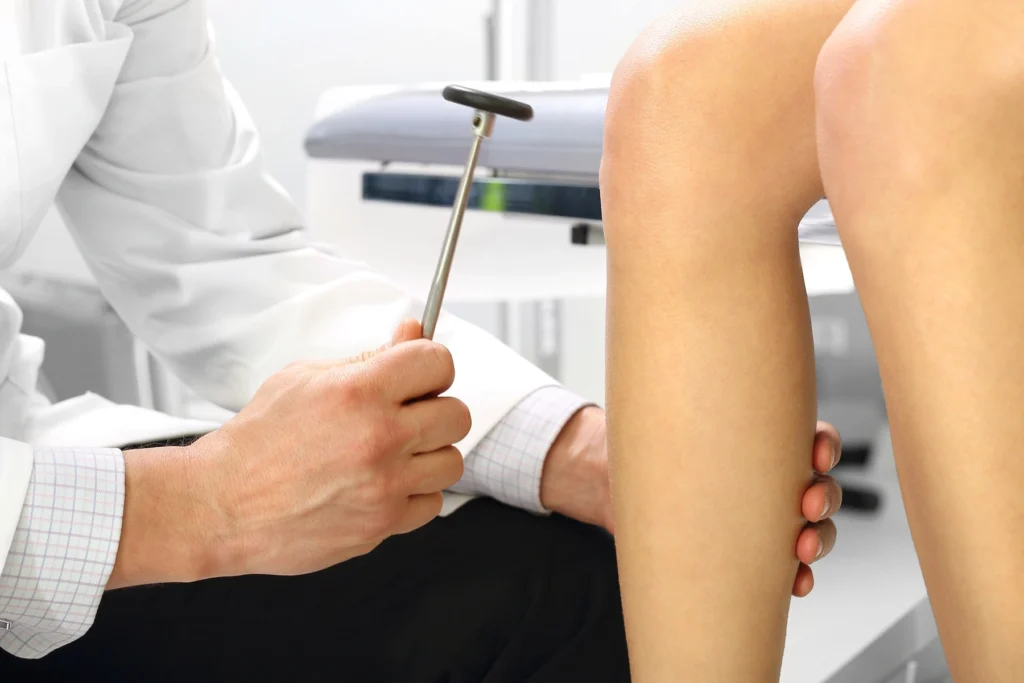
The neurologic and musculoskeletal examinations evaluate flexibility, movement, strength, reflexes, balance, and walking pattern. Functional tests elicit the source of pain and target areas of muscle weakness or joint laxity.
Electromyography (EMG) and nerve conduction studies are often an extension of the neurological physical examination and may provide greater sensitivity and accuracy in arriving at a clinical diagnosis.
Numb hands or feet, absent reflexes, weakness, limping, or shooting pain will usually prompt further investigation.
If you feel those needles and pins, it may be time to come in for an EMG test.
EMG testing may reveal the source of more subtle or elusive symptoms that might otherwise go undetected.
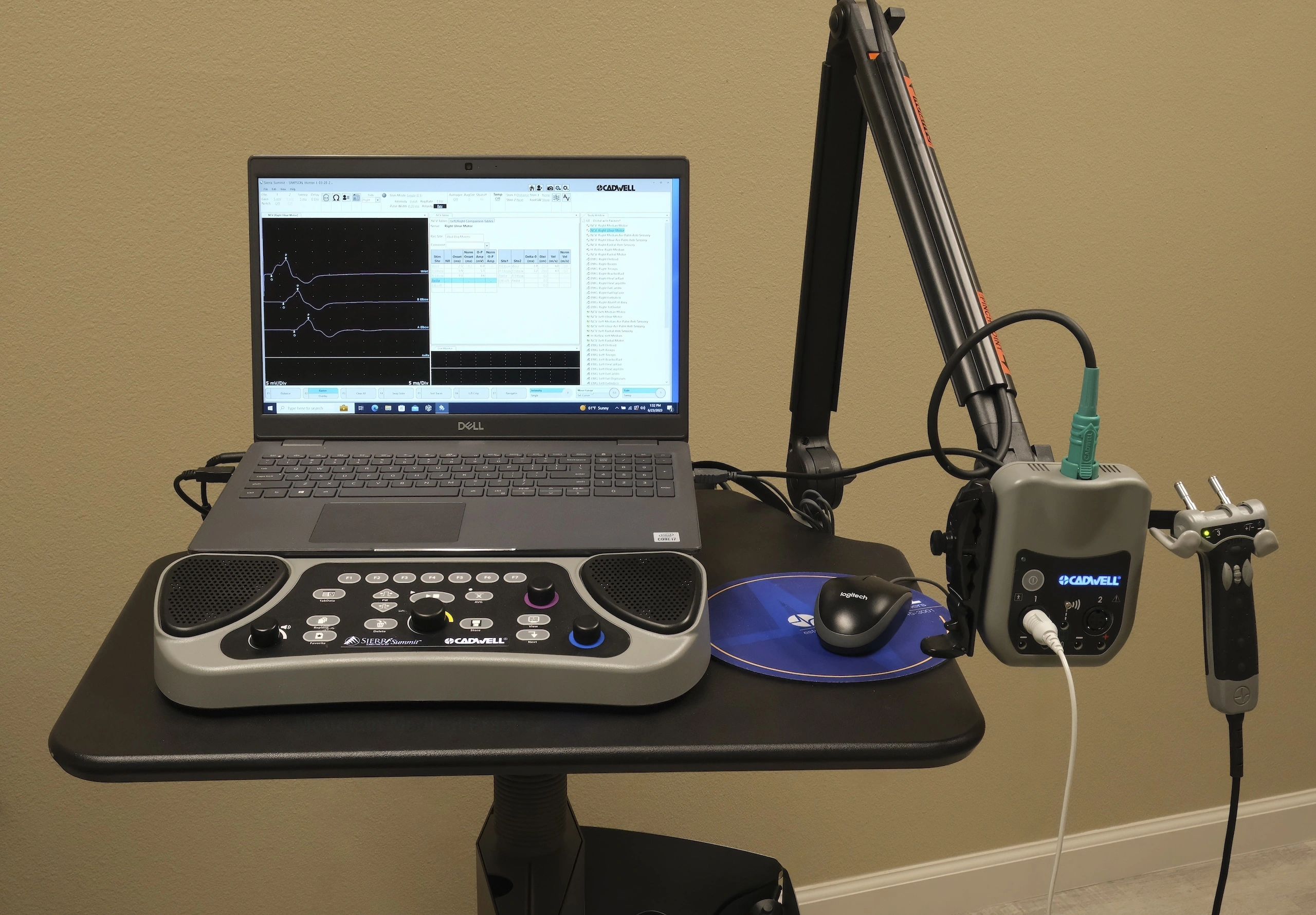
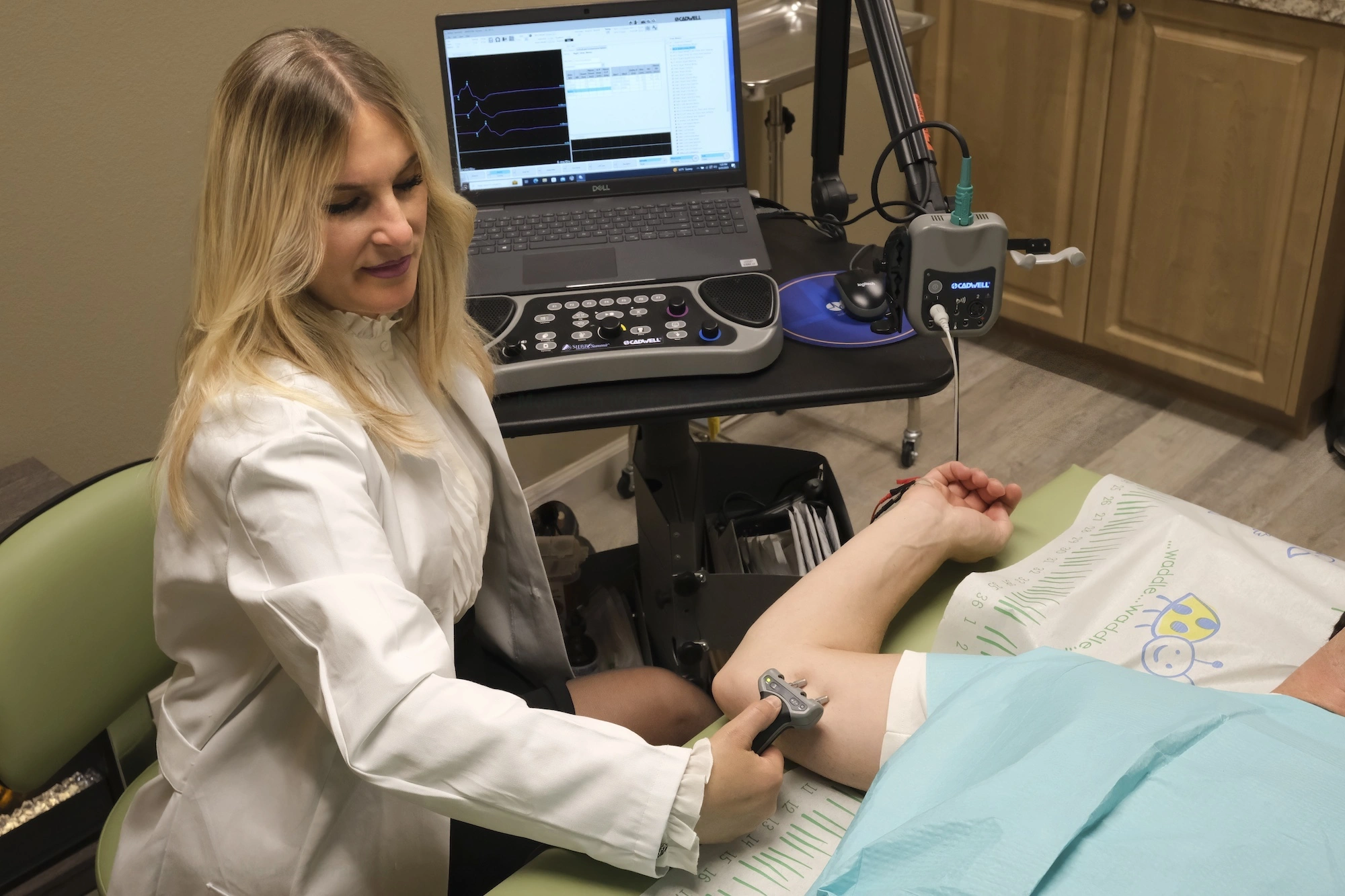
Electromyography (EMG) & nerve conduction studies (NCS) are dynamic tests that measure muscle and nerve function in real-time.
During NCS, low grade electrical currents are applied to the skin to test how nerves respond and to see how quickly impulses travel through nerves. During EMG, a thin, sterile, disposable needle electrode is inserted through the skin and directed into selected muscles in order to detect normal versus abnormal electrical activity in muscles.
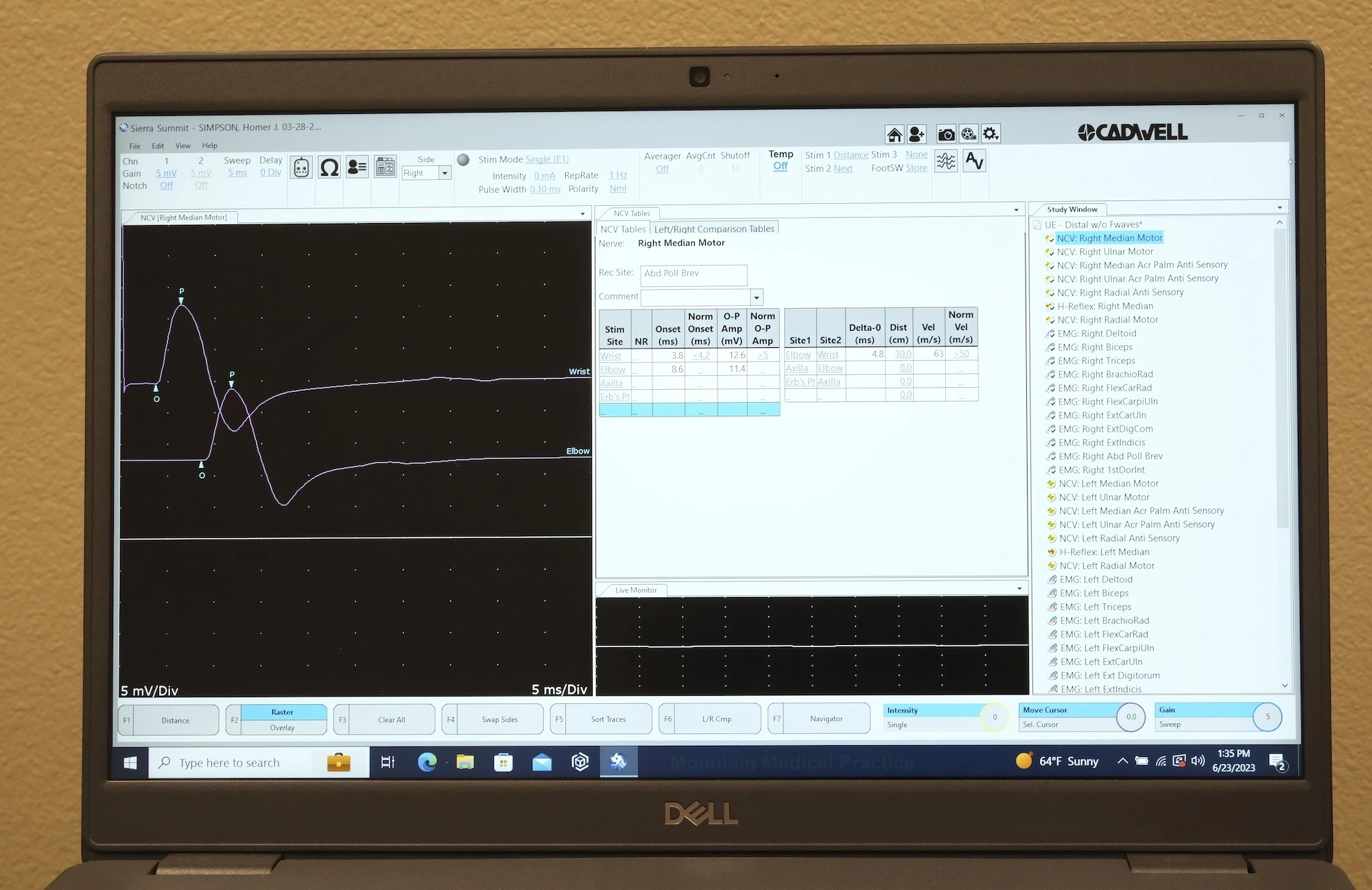
EMG & NCS generate waveforms that appear on a computer monitor displaying results.
Electrodiagnostic muscle and nerve testing is a very sensitive indicator of spinal nerve root involvement in low back and neck conditions serving to identify the source of pain and to better direct treatment decisions.
Nerve entrapment at the wrist, as in carpal tunnel syndrome, or at the elbow, as in cubital tunnel syndrome
Back Pain with Pinched Nerve
Pinched nerve roots in the neck and back with electric pain in the arms or radiating pain in the legs, as in radiculopathies
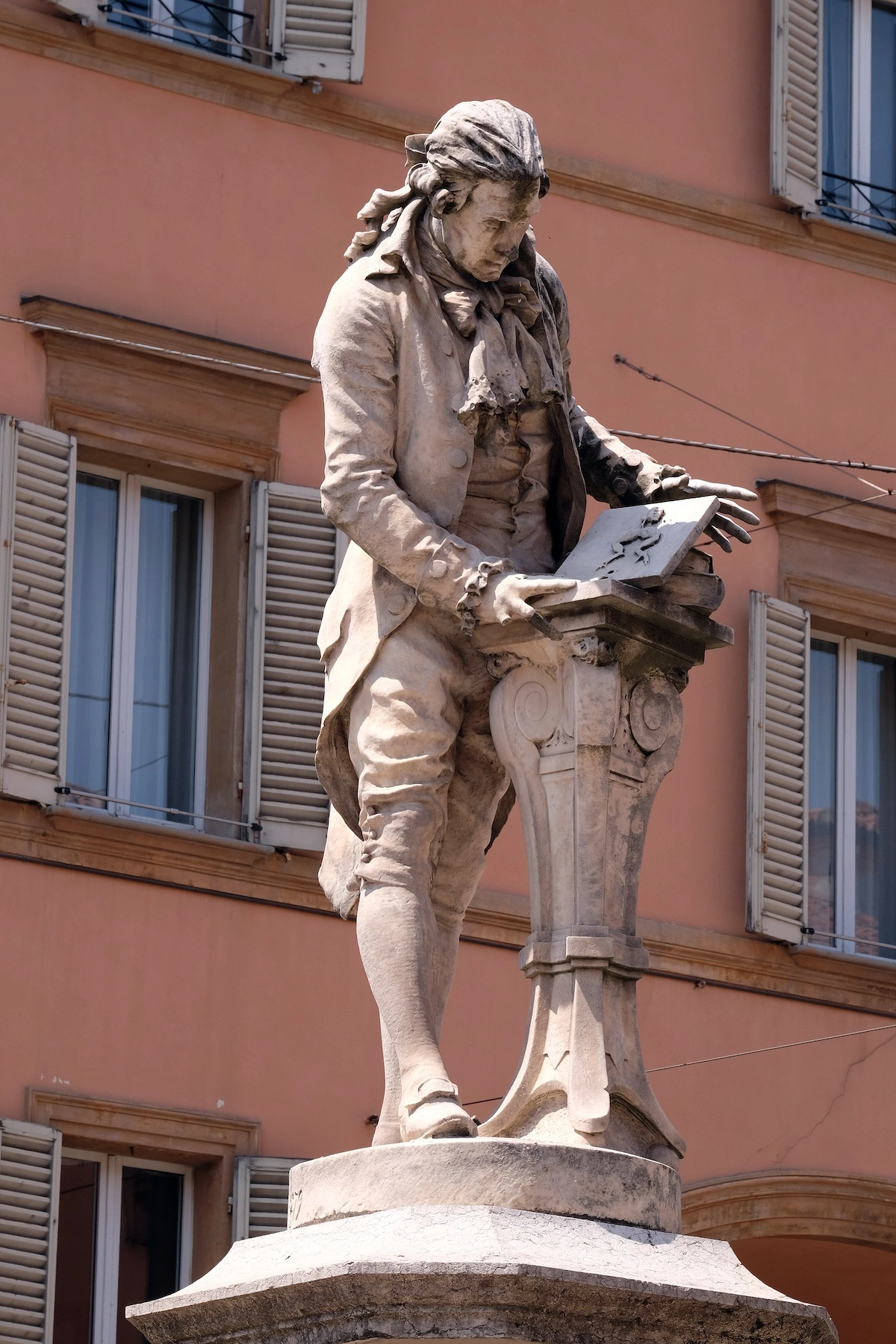
EMG theory originated centuries ago when an Italian scientist used electricity to make a frog’s legs dance!
Luigi Galvani
(1737 - 1798)
Physician, philosopher, and acclaimed Father of Electrophysiology
Important Practice Update!
Effective June 1, 2026,Mountain Medical Practice will transition to a fully virtual care model with all appointments conducted via secure telemedicine.
Contact us for additional information and assistance.